Bookkeeping does not require a college degree or a messy spreadsheet. For most owners, the fear of doing it wrong is the biggest stress. But the real danger is not knowing your numbers. You cannot grow if you are operating in a financial blind spot.
To get out of that blind spot, you need habits that stick. You don’t need a complex system. You just need to record every purchase as it happens and check your numbers once a week. Using simple bookkeeping software lets you see exactly what is happening with your money.
The timing for these habits is vital. Demand for pros and freelancers is high, but staying profitable is still hard. Recent data shows that 77% of solo owners see no more money year over year. Also, 35% struggle with late payments from clients. Good bookkeeping protects your pay. It helps you catch these problems before they become a crisis.
This guide covers:
- Using plain-language reports to confirm how to do bookkeeping for small business.
- A 5-minute daily bookkeeping routine designed for field work.
- Leveraging digital records for faster, more accurate reconciliation.
- Tracking income by service type to find simple bookkeeping for freelancers that pays.
The Difference Between Just Getting By and Being Profitable
Clarity is better than a complex system. You need to see your cash flow in plain English. You must be able to answer one simple question: “Am I actually making money?” If you do not know the answer, your current system is failing you.
Bookkeeping is the tool that tells you why you have money—or why you don’t. It is the best way to see if you are just getting by or truly building a business. When you know your numbers, you gain a massive advantage over your competition.
When you have total financial clarity, you can:
- Save your profit. Catch rising fuel or material costs before they eat your take-home pay.
- Be ready for tax time. Keep digital records that will not fade or get lost in your truck.
- Make better choices. Use hard facts to grow your business instead of just a gut feeling.
Bookkeeping often feels hard and boring. But it does not have to be. You do not need to learn “accountant-speak” to succeed.
The right bookkeeping software does the hard work for you. It records your spending and sorts it into groups automatically. This lets you stay focused on the field work that actually pays the bills.
How Bookkeeping Improves Profitability
Every business must make a profit to survive. But it is very easy to lose money when you are busy. If you are not sure exactly how much you clear after your costs, you are likely operating in a financial blind spot. This means you are leaving money on the table.
Small, unrecorded costs can gut your take-home pay. Over a single month, those “little” things add up fast. Here is how much a financial blind spot can cost you:
| Situation | What Happens | Estimated Monthly Loss (Low) | Estimated Monthly Loss (High) |
| Missing receipts | You miss costs you already paid. | $150 | $400 |
| Late invoicing | You delay cash coming in. | $300 | $1,000 |
| Untracked small expenses | Small costs erode your profit. | $150 | $500 |
| Forgotten unpaid invoices | You never collect earned money. | $300 | $1,200 |
| No weekly review | Problems escalate. | $400 | $1,000 |
| Pricing guesswork | You undercharge without knowing. | $500 | $2,000 |
| Total Potential Monthly Loss | $1,800 | $6,100+ |
When you keep up with your books, you shine a light on these leaks. You can fix them before they get worse.
You can also see which jobs earn the most so you can focus on the work that truly pays.
RELATED ARTICLE — How to Calculate NOPAT: Formula and Example
The 5-Minute Daily Bookkeeping Routine
You do not need to spend hours on your books. Just five minutes a day is enough to stay in control. When you record costs as they happen, your numbers stay accurate. This means no more long sessions spent “catching up” on your desk work at the end of the month.
Stop saving your bookkeeping for the weekend. Say goodbye to the stress of a messy desk or a cluttered truck.
Here is how to keep up with your finances in just five minutes a day.
Log Income Right After Each Job (2 Minutes)
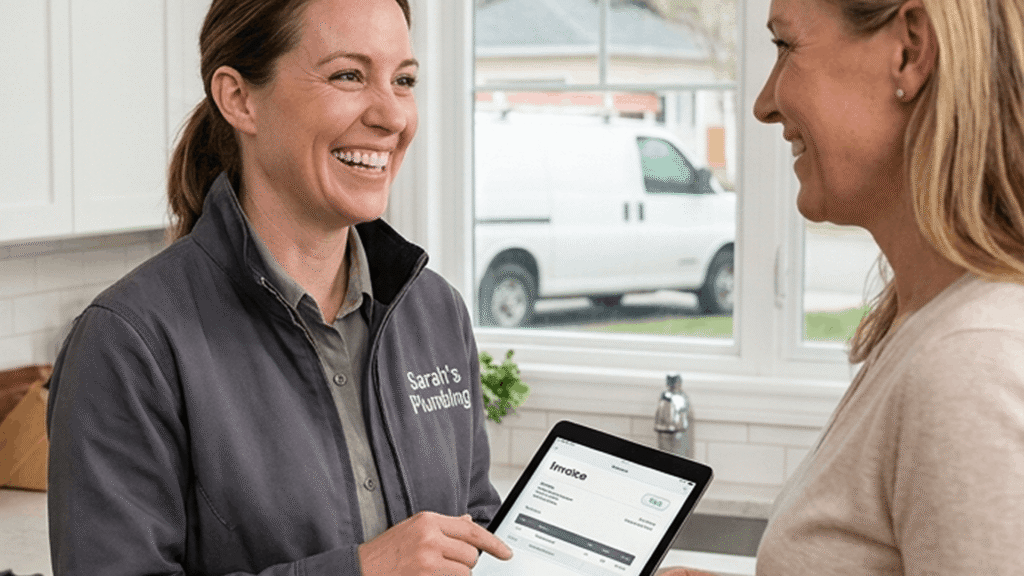
When you finish a job, send the invoice before you leave the site. You can do this easily by using an app like Invoice Simple. Write the invoice while the details are still fresh in your mind.
This ensures you never forget a small part or undercharge for your labor.
Capture Expenses On the Spot (1 Minute)
Do not let receipts pile up in your car or wallet. Take a photo of the slip the second you pay at the store. Storing a digital copy in your bookkeeping software means you will never lose a tax deduction again.
Let Your Bank Feed Update Your Records (1 Minutes)
Connect your bank account to your software. Your transactions will import on their own. This removes the need to enter every cost by hand. Your records stay current with zero manual effort.
Check Your Numbers Before You Log Off (1 Minute)
Take one minute at the end of the day to check your entries. Make sure every cost is in the right group, like “Fuel” or “Tools.”
This small habit makes tax time simple and keeps your profit and loss report accurate.
Why Digital Records Are a Solo Owner’s Best Friend
Digital records completely replace receipts and messy notes. They give you an accurate, searchable system. You can find any job, cost, or payment in a matter of seconds. This makes reconciliation faster and gives you confidence that your records reflect what actually happened.
Paperwork stashed in your truck or bag leads to stress. Faded receipts and ripped notes are hard to read. You only ever see a few pieces of the puzzle at a time. This makes it impossible to see the full picture of your profit.
Digital records are the fix. Your receipts and invoices are stored in one safe place. They are easy to read and date.
This is a vital part of simple bookkeeping for freelancers. It makes a world of difference:
- Find any receipt on your phone in seconds.
- Match your records to your bank account with ease.
- See exactly what you earned and spent without digging through paper.
- Claim every possible tax deduction to keep more of your pay
This is a huge help for cash-basis accounting. That is when you record money when it hits your bank and costs when you pay them. With digital records, every payment is already time-stamped. You know exactly what happened and when.
RELATED ARTICLE — 8 Reasons You Need a Small Business Expense Tracker
Categorizing Your Income to Identify Your Best Services
Find out which jobs make you the most money by sorting your income by service type. From there, you can adjust your schedule, pricing, and marketing to win more similar jobs. As a bonus, with automatic categorization, most of this work is taken care of by your software.
Total income is a helpful number, but there is more to the story. Two jobs can bring in the same amount of money but leave you with a very different profit.
One job might take longer or cost more in fuel. If you do not separate them, you cannot see that difference. If you don’t separate them, you can’t see that critical difference.
When you categorize your income, patterns begin to form. You can tell which services are your biggest profit earners. You can then spend your time on the work that pays best.
To categorize your income:
- List your last 10 jobs and group them by type.
- Create labels like “repairs” or “installs.”
- Assign each new invoice to a label before you send it.
- Try Invoice Simple today to start sorting your income.
This takes time to do by hand. A better way is to use bookkeeping software that sorts your income using artificial intelligence (AI). This can save you nearly an hour a day. That is five hours a week you can spend on paid work instead of admin tasks.
Scaling Your Back Office as Your Client List Expands
As your client list grows, your admin work can pile up. The right software organizes your records and brings clarity to your profit and loss, even as you scale. Your back office runs like a well-oiled machine, which means you can take on more work without adding stress or losing control.
Growing your business is a great goal. But more jobs mean more invoices and more costs to track. If your system does not grow with you, mistakes will happen. You might miss small costs like payment fees. You might even underprice your work.
A simple system beats a complex one every time. Your software should help you grow, not slow you down. Look for tools that offer:
- Automatic tracking
- Integration with your invoicing system
- Action-oriented reporting
- Support for as-you-go, mobile-first bookkeeping
The benefits are clear. You can turn more customers into more income. You will know exactly which jobs are worth your time. You can spend more hours on the work you love and never fall behind on your desk work. That is what real growth looks like.
FAQ
Here are commonly asked questions about bookkeeping for small businesses.
What is the easiest way to start bookkeeping for a new business?
How often should I reconcile my business bank statements?
What are the most common bookkeeping mistakes for solo operators?
– Forgetting to record your expenses
– Not sending your invoices right after finishing the job
– Skipping daily or weekly reviews
– Missing small costs
– Not using reporting data to make business decisions