
There’s a connection between how you appear to your customers and your small business billing practices. Using professional invoice standards can stop late payments and boost how clients see you.
This guide will teach you how to stop appearing like a disorganized amateur to clients, which leads to payment excuses and invoice disputes. This slows down your cash flow and depletes your operating capital. You could become too reliant on high-interest credit or even go out of business.
Read on to learn:
- How your brand image and bank account are related
- Why itemizing invoices is key to getting paid faster
- How to use mobile invoicing and invoice templates
- Why adding standard payment terms improves cash flow
These skills put sloppy invoices in the rearview mirror. They take the guesswork out of getting paid. And you build more trust with your clients.
Create the professional business image you desire. It starts with giving every client a clean, organized invoice that says you’re on top of how your small business operates.
The Hidden Link Between Your Brand Image and Your Bank Account
You may not realize your brand image and your bank account have a direct link between them. Your work may be great, but it alone can’t speak for your business. Messy invoices make the wrong impression with customers, which has a domino effect on your revenue and profitability.
When you’re a small business owner—especially a mobile sole proprietor—you are your brand identity. So, it’s easy to fall into the trap of believing your work is the only thing that speaks for your company.
But leaving a customer with a beautiful haircut or a fixed air conditioner isn’t enough these days. What happens when the client receives your invoice? That may be the final impression they have of your business.
If your invoice is messy or incorrect, the customer is more prone to treat it as a low priority. After all, if you don’t take getting paid seriously, why should they?
What makes a customer bill seem messy?
- Having the wrong customer details on it
- Failing to include your company information
- Lack of warranty data, if relevant
- Incorrect math in totaling up the charges
- No itemized billing of individual services
- Handwritten scribbles on a sheet of paper
- Missing information about how or when to pay
- Invoicing long after a service is rendered
Not only is this likely going to result in a late payment—sloppy invoicing can have other negative consequences.
Say you want to follow up to ask for a review, testimonial, or referral. That poorly handled invoice is the client’s last impression of your business. Do you want to risk losing a star or not getting the free word-of-mouth advertising you really deserve?
All of these downsides to messy invoicing affect your bank account at the end of the day. Poor invoice management can cause cash flow problems that influence your ability to pay bills. And it can ultimately keep you from growing your business and reaching your profitability goals.
Itemizing Your Services to Eliminate Client Questions
One way to fix sloppy invoices is to itemize your services or customer purchases. Rather than giving your client a vague invoice, give them a more detailed one. It looks more professional and helps you avoid going back and forth over costs. In the end, you get paid faster and with less hassle.
Above, we mentioned that vague invoices are part of what makes a client bill sloppy. For a mobile pet groomer, for example, this might mean simply invoicing $250 for “services.”
But your invoice should include specifics, such as:
- Dog shampoo for [dog’s name and breed]
- Coat conditioning treatment
- Blow drying and brushing
- Puppy cut for summer
- Nail trimming and paw check
Next to each service should be listed the cost. Any discounts or coupons should be mentioned when deducted from the final total.
You don’t need to mention your overhead burden, labor burden, or processing fees. These should be rolled into your pricing internally.
What about markup vs. margin? If you’re selling a product, you need to sell it for more than you paid for it. That’s your markup. Margin is the percentage of your sale price that is profit.
Being detailed about your invoicing eliminates the dreaded back-and-forth email chain. This is where the customer is unclear about what they’re paying for. This frequently results in delayed payment and eats up your precious work time. Both of those hassles reduce your bottom line.
If the customer is paying on the spot, there are no questions or confusion about your services. You don’t want to end on an argumentative note—one that makes you late for your next appointment.
A carefully itemized invoice has other bonuses. When a customer wants to book your services again, they know what each item costs. Plus, they can use that information to refer you to friends and family.
You can also use your own detailed invoices to create estimates for future clients. When someone calls with a similar need, you have all the information right at your fingertips.
Sending Invoices the Moment the Job Is Finished
There are several benefits to invoicing customers right away, instead of waiting. You look more professional. And invoices are less likely to get forgotten, so you get paid more quickly. It also makes it easier to ask the client for a positive online review when everything is wrapped up immediately.
When you work in a conventional office, it’s a lot easier to send an invoice as soon as a service is rendered. Everything you need is right there, and you’re not rushing to get to your next client.
But when you have a mobile business and work on your own, sending invoices becomes a major challenge. You have to wait until you’re home to send out bills to your customers. It’s easy, though, to get sidelined by family responsibilities and other commitments. So, those invoices get put off, and some may even fall through the cracks.
If you only bill customers once you find the time, you also wind up getting paid later than you’d like. Plus, there are other downsides:
- You can forget to send an invoice or include certain services.
- The client takes the invoice less seriously and pays late.
- You risk going back and forth if the customer has questions.
- The customer might think they’re an afterthought to you.
- You lose opportunities to request a client review right away.
- Your business appears less efficient and professional.
Ideally, you want to invoice on-site, right after you detail a car or provide mobile manicure services. There’s nothing that says you’re on top of your business like the customer getting a text or email ping while you’re still right there with them!
They can clarify any issues immediately. Oops, they forgot to give you a coupon. No problem—you can make an adjustment right away. You create the invoice using an app on your mobile phone or tablet. Your office is in the palm of your hand.
Giving your customer an invoice as soon as services are provided also opens the door to asking for an online review or website testimonial. You want to capture their positive feelings about you and your business while they’re still fresh.
“Thanks for taking care of that fee right away! I’m so glad you were happy with my service. Is it okay if I send you a link so you can post an online review of my company?”
On-site mobile invoicing makes the customer more likely to pay instantly, since they can wrap up the entire transaction faster. There’s an expectation that you anticipate payment for services rendered. This puts subtle psychological pressure on the client.
There’s nothing wrong with that! Plenty of mobile providers get paid at the time of service, from veterinarians to plumbers. You probably pay many people that way, like your electrician or the person who cleans your gutters every fall.
Of course, some businesses don’t need to be paid instantly. Your landscaper, for instance, might bill you at the end of each month. But you both know the terms for invoicing, which is key. The next section discusses this in more detail.
RELATED ARTICLE — Swipe, Tap, Done: How to Take Credit Card Payments as a Small Business
How Professional Payment Terms Act as Your Admin Team
Adding standard payment terms to every invoice reduces confusion about payment due dates. Everyone is on the same page, and you don’t have to chase down payments, which can feel embarrassing. Plus, knowing when you’re going to get paid lets you manage your cash flow better for business operations.
Big companies typically have an accounts receivable team to handle invoicing. And even smaller businesses with core office staff have someone to handle administrative tasks.
However, solopreneurs and mobile business owners have to tackle billing on their own. Smart small business owners learn that they can make their invoices do some of the heavy lifting for them.
What Are Standard Accounting Terms for Invoices?
They do this by using standard accounting terms on every invoice. Examples of these terms include:
- Due on receipt (due immediately when the invoice is received)
- Payment net 15 days (customer has 15 days to pay)
- Payment net 30 days (customer has 30 days to pay)
- Payment due by the last day of the month (schedule varies)
Net payments include the entire calendar week, even weekends. So, if you invoice a client on October 1 with terms of net 30 days (aka n/30), the invoice is due by October 31.
Including these payment terms on your invoices sets expectations automatically. You can use them with mobile invoicing, whether you’re getting paid right away or the customer is paying later in the month.
Clients aren’t left wondering if they need to pay you immediately or have some leeway. And you will know what your cash flow will look like in any given month. That lets you plan for your own obligations as well as for growth or merely taking a vacation.
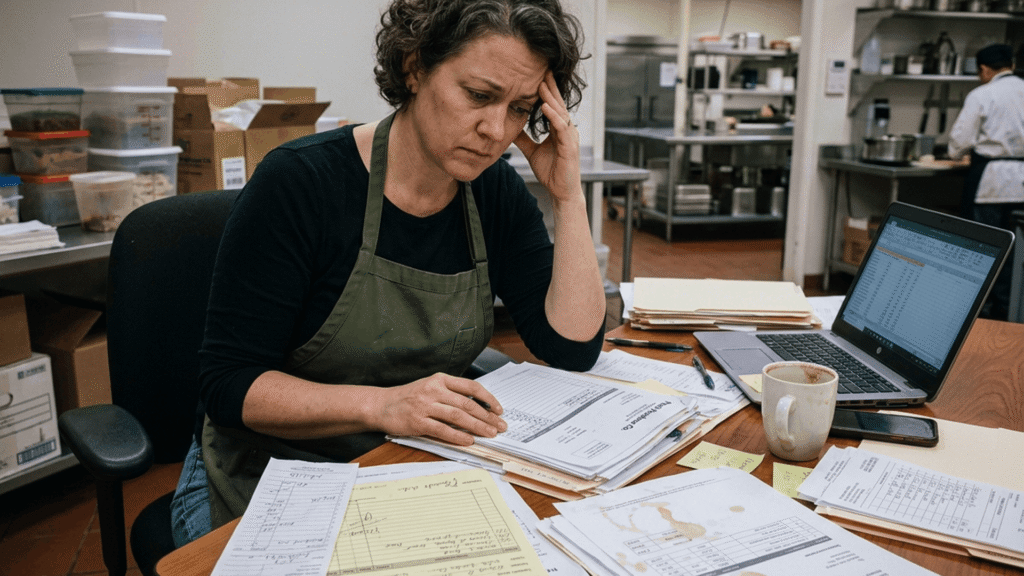
Chasing Down Payments Is Stressful
Do you find it stressful to ask clients for money? You’re not alone. But unfortunately, late payments are a huge problem for small business owners in the US.
You may have seen some of the popular social media videos on the topic from irate professionals. They talk about the aggravation of getting paid late and clients who ignore their invoices. It leads to financial instability and difficulty moving forward with business goals.
The statistics speak for themselves:
- One-fifth of new businesses fail in their first year. More than a third of these failures are due to the business running out of capital. You don’t get paid? You don’t have money to operate.
- Among B2B businesses in 2024, half of all credit invoices were overdue. This has a knock-on effect with small suppliers and providers, causing them to also pay late or deplete capital. This could be you if you’re, say, a caterer for a local business that’s owed money by a larger corporation.
- Late payments for small businesses are more associated with reliance on high-interest credit cards, loans, and lines of credit. Paying interest eats into profits.
These facts are why setting expectations on your invoice removes a lot of stress around billing. It makes it crystal clear when you need to get paid.
It helps if the payment expectation is clear at the time the customer books your services or places an order for goods. You can include this information on your website. A banner that says “payment is due when service is rendered” gives clients a heads-up when they choose your company.
Another way to reinforce the terms on your invoice is when you confirm orders or appointments. In your text or email to the client, add a line about when you expect to be paid.
That’s the perfect time to also mention how you prefer to be paid. You can give options like check, cash, Zelle, PayPal, Venmo, etc.
Or you might have your own payment gateway set up via an online invoicing platform. That makes it super easy to integrate billing and payments with other accounting functions.
Using Payment Terms with Contract Clients
If you have a contract with a customer for regular work, be sure to include payment terms in the contract. You can also mention late fees and interest added if a customer pays late. And you can politely specify that unpaid invoices mean no future work until the customer catches up.
If a regular client develops a habit of always paying late, you have several long-term options:
- Change the terms of payment, budgeting for a later payment.
- Discontinue providing services and replace the client with a new one.
- Switch to receiving a payment up front before services are rendered.
It depends on your financial situation and how important the client is to you. You might be able to leverage some wiggle room with an invoice that offers longer payment terms. In return, the client could give you a mention on your community Facebook page or refer you to others.
Asking a client who pays unreliably to pay in full first or make a down payment doesn’t make you look bad. Rather, it makes you appear professional and on top of your game.
Make looking professional easy with the #1 mobile invoicing app. Try Invoice Simplefor your small business to give customers a great impression and get paid faster!
RELATED ARTICLE — How to Add Terms and Conditions on an Invoice
Standardizing Your Templates for a Consistent Brand Voice
Utilizing invoice templates is another way to look more professional with your clients. Fill-in-the-blank invoice templates make billing faster and easier. And they help boost your brand identity by giving your clients an invoice that looks the same way every time. You look dependable and reliable because you use dependable tools.
Using professional templates for invoices makes the entire process easier for small businesses. It’s another way you can enhance the impression you give to clients.
A template is a framework that you simply fill in with your billing information. It’s like using a paint-by-number kit rather than creating an entire piece of art from scratch every time.
Templates offer multiple advantages over other types of invoices:
- You can customize them, so they suit your unique business needs.
- You’re less likely to omit a vital element on your invoice.
- Every invoice looks identical for a stronger brand voice and recognition.
- Customers will see your business as more authoritative and professional.
Another upside of using templates is you’ll be able to send invoices much faster. Pair templates with mobile billing, and you’ll never struggle with invoicing at the end of a long day again. Go to the gym or enjoy a relaxing dinner, knowing all your invoicing tasks have been taken care of.
Remember, your invoice is part of your brand identity and often the last impression a customer receives of your business. You can paint yourself as a reliable, organized provider when you use the same invoice format every time. Using dependable tools shows you are dependable as well.
Pick the right platform for your company’s mobile invoicing, and you’ll find other advantages alongside templates:
- Estimate templates that can be converted from bids to client invoices
- Profit margin calculation tools to ensure you’re charging enough
- Online receipt generation to give customers as payment confirmation
- Business expense tracking for tax filing and creating accounting reports
- Fast and flexible ways to get paid that satisfy you and your customers
Do your invoices measure up? Use this chart to compare:
| Sloppy Invoices | Professional-Looking Invoices |
| Handwritten and may not be legible | Typed online with invoicing software |
| Vague and not itemized | Services and goods are itemized |
| May contain calculation errors | Math adds up because it’s digital |
| Don’t tell client when or how to pay | Include standard payment terms |
| Sent whenever you get around to it | Sent immediately, even in the field |
| Look different all the time with no brand representation | Use a template for a consistent look and boost your brand identity |
| Make you look disorganized and make the customer feel like an afterthought | Make you look on top of your game and make the customer feel valued |
RELATED ARTICLE — What Are Net 180 Payment Terms?
FAQs
What is the most important piece of information to include on a small business invoice?
– The date (day/month/year)
– The customer’s details (name, address, phone, and email)
– Your contact information (business name, phone, and email)
– An itemized list of the services rendered or goods purchased, along with the total due, less any discounts or offers
– The payment terms indicating when payment is due (on receipt, net 30, etc.) and how the customer can pay
Does my invoice need to be fancy to look professional, or just clean?
If you use an invoice template, you’ll get a clean, consistent look with all your invoices.
You can add a logo or other embellishments if you like. This is part of your brand identity, but it’s somewhat dependent on your profession.
Graphics, colored print, and special fonts are more common in fields where aesthetics are important. You probably don’t need them as an HVAC specialist. But if you’re a photographer or florist, for example, you could consider adding artistic elements.
How do I tell a long-term client that I am switching to a more professional, standardized billing process?
You may encounter some resistance at first, especially true if you serve a less tech-savvy senior demographic. You might be switching from old-fashioned handwritten bills to digital payments.
It could be worth your time to create a step-by-step instruction sheet for these clients. As an incentive to adopt the new method, offer a small discount on their first payment or give them a coupon for a future service.
Stress that standardized billing is a benefit for both of you because you’ll both be on the same page. And it will make payment easier for them with no ambiguity.
You may be surprised—many customers will love the new streamlined process. And they’ll see you as more professional and successful, which is just what you want!